Devotion Under the Scalpel: A Surgeon’s Ordeal in the Heart of London

“Edward, you’re needed in Theatre 3. Now.”
The words echoed down the corridor, slicing through the sterile hum of St. Thomas’ Hospital. I barely registered the nurse’s urgency as I scrubbed in, my mind a cacophony of worry. My phone had vibrated twice in my pocket—first, a text from my wife, Sarah: “Call me. It’s urgent.” Then, a missed call from my sister. I’d ignored both. There was no room for distraction; not today.
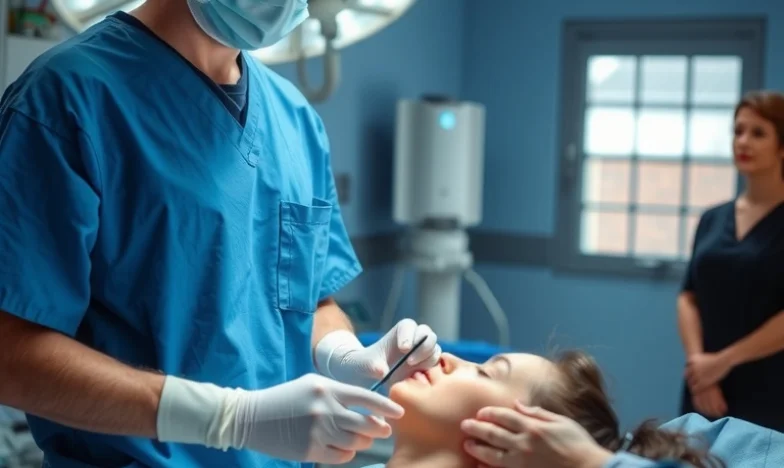
Inside Theatre 3, the air was thick with anticipation. The patient, Emily Carter, was just twenty-four, her face pale beneath the harsh lights. She’d been referred to me after a routine dental check revealed a mass in her parotid gland. The scans were ominous—close to the facial nerve, a millimetre’s slip could leave her paralysed on one side. Her mother had gripped my hand before we wheeled her in, eyes brimming with hope and terror. “Please, Dr. Harrington. She’s all I have.”
I nodded, masking my own turmoil. The truth was, I hadn’t slept in two days. Sarah and I had been arguing—no, screaming—about my hours, my absence, my inability to be present for our son, Oliver. Last night, she’d threatened to leave. “You care more about strangers than your own family!” she’d spat, slamming the door. I’d slept on the sofa, staring at the ceiling, guilt gnawing at my insides.
But now, in the theatre, I had to compartmentalise. My team looked to me for calm, for certainty. I steadied my hands, forced my mind to focus on the anatomy before me. “Scalpel,” I said, voice steady. The incision was clean. I worked methodically, dissecting tissue, tracing the nerve with painstaking care. Sweat beaded at my brow beneath the mask.
Halfway through, the anaesthetist leaned in. “BP’s dropping. She’s tachy.”
“Clamp, now!” I barked, adrenaline surging. For a moment, the world narrowed to the field of surgery—the delicate dance between life and disaster. We stabilised her, but my heart hammered in my chest. I could not afford a mistake.
As I worked, my mind flickered back to Sarah. Was she packing her bags? Was Oliver crying for me? My hands trembled, just for a second. I caught the scrub nurse’s eye—she looked away, pretending not to notice.
“Dr. Harrington, are you alright?” whispered my registrar, Priya. Her concern stung. I was supposed to be unflappable, the rock everyone leaned on.
“I’m fine. Let’s keep going.”
The tumour was stubborn, entwined around the nerve like ivy. Every movement was a negotiation. I remembered Emily’s words before the anaesthetic took her: “Will I still be able to smile?”
I wanted to promise her, but I knew better. Medicine is hope, but it’s also honesty.
The hours dragged. My back ached, my mind screamed for respite. At one point, I thought I saw Sarah’s face in the observation window, her eyes accusing. I blinked, and she was gone.
Finally, the tumour came free. I checked the nerve—intact. Relief flooded me, so intense I nearly wept. We closed up, and I peeled off my gloves, hands shaking.
Outside, Emily’s mother rushed to me. “Is she—?”
“She’s stable. The nerve is intact. She’ll need time, but she should recover fully.”
The woman sobbed, clutching my hands. I felt hollow, like a shell. I wanted to go home, to fix things with Sarah, to hold Oliver. But as I reached for my phone, it buzzed again—a message from my sister: “Mum’s had a fall. She’s in A&E at King’s.”
I stared at the screen, numb. How much more could I give? My family needed me. My patients needed me. I was stretched so thin I feared I’d snap.
I called Sarah. She answered on the first ring, voice tight. “Are you coming home?”
“I have to go to King’s. Mum’s had an accident.”
A pause. “Of course. Go. I’ll put Oliver to bed.”
“Sarah, I—”
But she’d already hung up.
I changed out of my scrubs, hands still stained with iodine. The tube ride to King’s was a blur. I replayed the surgery in my mind—every decision, every risk. I wondered if Emily would thank me, or if she’d curse me for the scar I’d left.
At A&E, my sister, Alice, was waiting. Her eyes were red. “She tripped on the stairs. They’re doing a CT.”
I sat beside her, exhaustion pressing down like a lead blanket. “I’m sorry. I should have called.”
Alice shook her head. “You’re always saving everyone else. When do you save yourself?”
I had no answer. The guilt was suffocating. I thought of Sarah, of Oliver, of my mother lying behind those curtains. I thought of Emily, waking up with a new lease on life, never knowing the cost.
When the consultant came out, I snapped to attention, the professional mask slipping back on. “She’s got a mild concussion, but no bleed. She’ll need monitoring.”
Relief, again. But it was fleeting. I walked home that night through rain-slicked streets, the city lights blurring through my tears. I let myself into the flat, found Sarah asleep on the sofa, Oliver’s toy train clutched in her hand. I knelt beside her, my heart breaking.
“Sarah, I’m sorry. I don’t know how to do this anymore.”
She stirred, eyes softening. “You don’t have to do it alone, Ed. But you have to let us in.”
I wept then, for the first time in years. For the patients I’d saved, for the ones I’d lost, for the family I was losing by inches.
The next morning, I called in sick for the first time in a decade. I took Oliver to the park, watched him laugh as he chased pigeons. I held Sarah’s hand, promising to try, really try, to be present.
But even as I smiled, my phone buzzed—another emergency, another life in my hands. I stared at the screen, torn.
How do you choose between the people who need you and the people you love? Is it possible to be both a good doctor and a good father, a good husband? Or is something always lost in the balance?
Would you forgive me, if you were in my shoes?