Everything Will Be Alright, Son…

‘Everything will be alright, son… Everything will be alright… Heniek, son, it’s Mum,’ came the familiar, wavering voice through the phone. I clenched my jaw, staring at the rain streaking down the window of my cramped flat in Hackney. Even after all these years, she still announced herself as if I wouldn’t recognise her voice. As if I hadn’t heard it echoing in my head every night since I left home.
‘Mum, I know it’s you. Your name comes up on the screen, remember? I bought you that phone so you wouldn’t have to keep telling me.’ My tone was sharper than I intended, but I couldn’t help it. The day had already been a disaster: the boiler was on the blink again, my boss at the warehouse had threatened to cut my hours, and now this.
She hesitated, her breath crackling down the line. ‘I just wanted to hear your voice, Heniek. You sound tired. Are you eating properly?’
I pinched the bridge of my nose, glancing at the cold, half-eaten beans on toast on the table. ‘I’m fine, Mum. Just busy, you know how it is.’
‘You work too hard. You should come home for a bit. I made your favourite pierogi yesterday. The house is so quiet without you.’
I closed my eyes, the ache in my chest growing. Home. That little terraced house in Luton, with its faded wallpaper and the smell of cabbage always lingering in the air. I’d run from it at eighteen, desperate to carve out a life of my own in London, to escape the suffocating expectations and the endless arguments between Mum and Dad. But now, at thirty, I felt more lost than ever.
‘Mum, I can’t just drop everything. I’ve got work, bills…’
‘You always say that, Heniek. You never have time for your old mum.’ Her voice wobbled, and I heard the unspoken words: not since Dad died. Not since you left me alone.
I swallowed hard, guilt prickling at my skin. ‘I’ll try to visit soon, I promise.’
She sighed, a sound so heavy it seemed to fill the tiny flat. ‘Everything will be alright, son. You’ll see. Just don’t forget about me, eh?’
After we hung up, I sat in silence, the city’s noise muffled by the rain. I thought about the last time I’d seen her, at Dad’s funeral. She’d clung to me, her hands trembling, her eyes red-rimmed and pleading. I’d promised to visit more, to call every week. But life had a way of swallowing promises whole.
The next morning, I woke to a string of missed calls from Mum. My stomach twisted as I listened to her voicemails, each one more frantic than the last. ‘Heniek, please call me. I don’t feel well. I think something’s wrong…’
I called her back, heart pounding. No answer. Panic clawed at my throat. I rang her neighbour, Mrs. Evans, who promised to check on her. An hour later, she called back. ‘She’s had a fall, love. The ambulance is here now. You’d better come.’
The train ride to Luton was a blur of anxiety and regret. I stared out the window, watching the grey suburbs roll by, memories flooding back: Mum singing Polish lullabies, Dad shouting at the telly, the three of us crammed around the kitchen table. I’d spent so long trying to forget, but now all I wanted was to go back.
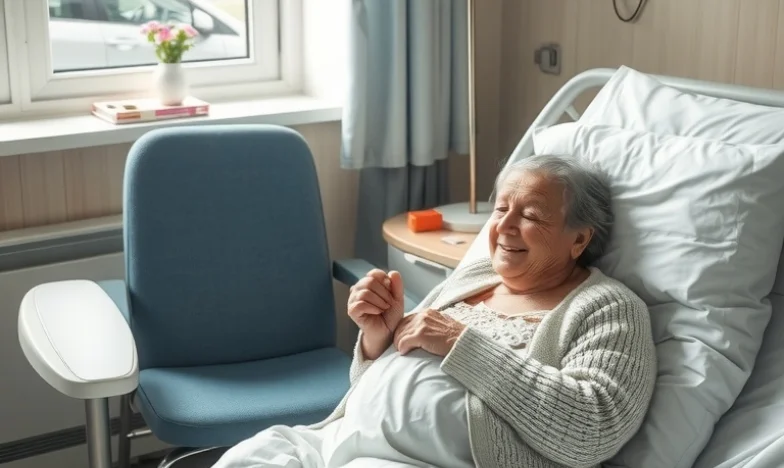
At the hospital, Mum looked so small in the bed, her hair a halo of silver against the white pillow. She smiled weakly when she saw me. ‘Heniek, my boy. You came.’
I took her hand, tears stinging my eyes. ‘Of course I came, Mum. I’m sorry I wasn’t here sooner.’
She squeezed my fingers, her grip surprisingly strong. ‘You’re here now. That’s what matters.’
The doctors said she’d had a minor stroke. She’d need help at home, at least for a while. I knew what that meant. My job, my flat, my carefully constructed independence—all of it would have to wait.
Back at the house, everything was just as I remembered: the faded family photos, the chipped mugs, the faint scent of lavender and old books. I made tea while Mum dozed in her chair, her breathing soft and steady. I wandered through the rooms, touching the worn banister, the threadbare sofa, the dent in the wall from when Dad had thrown a plate in one of his rages.
That night, as I tucked Mum into bed, she caught my hand. ‘You don’t have to stay, Heniek. I know you have your own life now.’
I shook my head, blinking back tears. ‘You’re my mum. Where else would I be?’
She smiled, her eyes shining. ‘You always were a good boy. Even when you pretended not to be.’
The days blurred together. I cooked, cleaned, helped Mum with her exercises. I called work, explained the situation. My boss was sympathetic, but I could hear the impatience in his voice. ‘Take care of your family, mate. But don’t expect your job to be waiting forever.’
At night, I lay awake, listening to the creaks and sighs of the old house. I thought about my friends in London, the life I’d built for myself. I missed the city’s chaos, the anonymity, the sense of possibility. But here, in this quiet house, I felt something I hadn’t felt in years: a sense of belonging.
One evening, as I was washing up, Mum shuffled into the kitchen. ‘Heniek, can we talk?’
I dried my hands, bracing myself. ‘Of course, Mum. What’s up?’
She sat at the table, her hands folded in her lap. ‘I know things haven’t been easy. Not since your father died. Not since you left.’
I looked away, shame burning in my cheeks. ‘I just needed space, Mum. I couldn’t breathe here.’
She nodded, her eyes sad but understanding. ‘I know. Your father… he was a difficult man. I wanted to protect you, but I didn’t know how.’
We sat in silence, the weight of years pressing down on us. Finally, she reached across the table, her hand warm on mine. ‘I’m proud of you, Heniek. You made a life for yourself. But you don’t have to do everything alone. It’s alright to come home sometimes.’
I swallowed the lump in my throat, blinking back tears. ‘I’m sorry, Mum. For everything.’
She smiled, her face softening. ‘Everything will be alright, son. I promise.’
As the weeks passed, Mum grew stronger. We fell into a rhythm: morning tea, walks in the park, evenings watching old Polish films. I found myself laughing more, the tension in my chest easing. I started to see the house not as a prison, but as a refuge.
One afternoon, as we sat in the garden, Mum turned to me. ‘You should go back to London soon. Live your life. I’ll be alright.’
I hesitated, torn between duty and desire. ‘I don’t want to leave you alone, Mum.’
She squeezed my hand. ‘You’re not leaving me. You’re living. That’s what I want for you.’
I nodded, tears slipping down my cheeks. For the first time, I understood what she meant. Home wasn’t a place. It was the people who loved you, flaws and all.
Now, as I pack my bag for the train back to London, I look at Mum, her face lined with age but radiant with hope. ‘Everything will be alright, son,’ she says, her voice steady. And for the first time, I believe her.
I wonder, as I close the door behind me, why it took me so long to realise that sometimes, going home is the bravest thing you can do. Have you ever run from something, only to find it was exactly what you needed all along?