My Mother’s Debt, My Sentence: A Story of Inherited Burdens

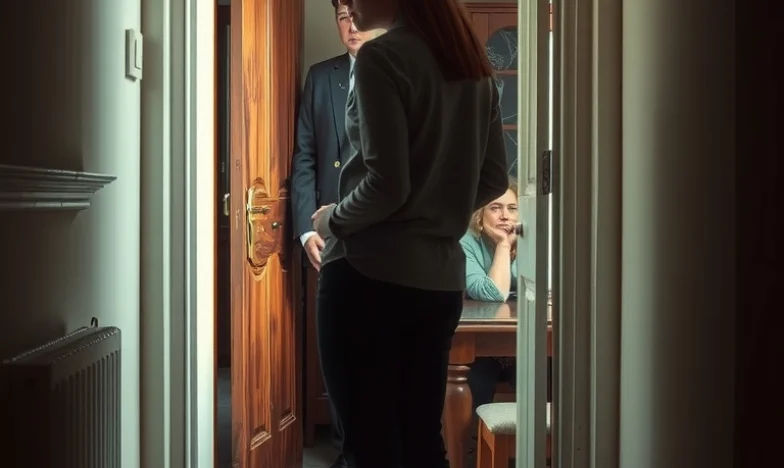
“Lucy, you need to answer the door. It’s them again.” Mum’s voice trembled from the kitchen, her hands shaking so much the mug rattled against the counter. I was sixteen, but I’d already learned to dread the sharp knock that echoed through our little terrace house in Sheffield. I pressed my forehead against the cold glass of the hallway window, watching two men in cheap suits shift from foot to foot on the front step. Debt collectors. Again.
I opened the door, heart thudding. “Can I help you?”
One of them, a tall bloke with a thick Yorkshire accent, looked past me. “We’re here to speak to Mrs. Turner.”
“She’s not well,” I lied, blocking the doorway. “Can you come back another time?”
He sighed, glancing at his clipboard. “Lucy, love, we know you’re just trying to help your mum. But this can’t go on. She owes a lot, and it’s not going away.”
I shut the door before he could say more, pressing my back against it, fighting tears. Mum was sitting at the kitchen table, her face pale, eyes rimmed red. “I’m sorry, love. I never wanted this for you.”
But it didn’t matter what she wanted. The debts were there, like a stain on our lives, and I was the one scrubbing at it, day after day. I missed school sometimes to help her sort through bills, to ring up creditors and beg for more time. My older brother, Tom, had left for Manchester as soon as he could, barely calling, leaving me to pick up the pieces.
I remember one Christmas, the year Dad left. Mum tried to make it special, but the bailiffs had already taken the telly and half the furniture. We sat on the floor, eating beans on toast, pretending it was a picnic. She wrapped up a scarf she’d knitted from leftover wool. “It’s not much, Luce, but it’s made with love.”
I smiled, but inside I was angry. Angry at Dad for leaving, angry at Mum for borrowing money she couldn’t pay back, angry at Tom for escaping. Most of all, angry at myself for not being able to fix it.
As I grew older, the debts grew too. Mum took out payday loans to cover old ones, and the interest piled up. I got a job at the local chippy after school, handing over most of my wages to help with the bills. My friends went to the cinema, bought new clothes, planned holidays. I learned to say no, to make excuses, to hide the truth.
One night, after another row about money, I found Mum crying in the bathroom. “I’m so sorry, Lucy. You deserve better.”
I knelt beside her, holding her hand. “We’ll get through it, Mum. We always do.”
But I wasn’t sure I believed it anymore.
When I turned eighteen, a letter arrived. It was from a solicitor, about an old loan in Mum’s name. She’d put me down as a guarantor when I was just a kid, forging my signature. Now they wanted me to pay. I confronted her, shaking with rage. “How could you do this to me?”
She broke down, sobbing. “I was desperate, Lucy. I thought I could fix it before you ever found out.”
I stormed out, walking the streets for hours. I thought about running away, like Tom. But I couldn’t leave her. Not yet.
The next few years were a blur of work, bills, and arguments. I moved out, renting a tiny flat above a shop, but the debt followed me. Every time the phone rang, my stomach twisted. I worked two jobs, barely sleeping, always anxious. My boyfriend, Jamie, tried to understand, but eventually he left, saying he couldn’t handle the stress.
Mum’s health got worse. She was diagnosed with depression, then diabetes. I took her to appointments, picked up her prescriptions, made sure she ate. Sometimes, when she was asleep, I’d sit by her bed and cry, wishing for a different life.
One day, Tom rang out of the blue. “How’s Mum?”
I snapped. “How do you think? She’s drowning, and I’m the only one trying to keep her afloat.”
He was silent for a moment. “I’m sorry, Luce. I just… I couldn’t cope.”
“Neither can I,” I whispered, hanging up.
The final straw came when I lost my job at the chippy. The shop closed down, and suddenly I was behind on my own rent. The landlord threatened eviction. I sat in my empty flat, surrounded by unopened bills, and screamed. Why was I paying for mistakes I never made?
I went to see Mum, determined to tell her I couldn’t do it anymore. She looked so small, curled up on the sofa, clutching a faded photo of us from happier times. “I’m sorry, Lucy,” she said again, voice barely a whisper. “I never meant for you to suffer.”
I sat beside her, tears streaming down my face. “I know, Mum. But I can’t keep living like this. I need to live my own life.”
She nodded, eyes shining with tears. “You should, love. You deserve to be happy.”
It wasn’t easy, but I started saying no. I stopped paying her bills, stopped answering calls from creditors. I focused on finding a new job, rebuilding my life. Mum struggled, but she found help through a local charity. Tom came home more often, helping out in his own way.
Slowly, the weight began to lift. I still felt guilty, but I learned that loyalty doesn’t mean sacrificing yourself completely. I started going out with friends, laughing again. I even met someone new, someone who didn’t judge me for my past.
Mum and I still have our moments. Sometimes she apologises, and I tell her it’s okay. Other times, I get angry all over again. But we’re learning, together, how to move forward.
Now, when I look back, I wonder: How much of our lives do we owe to the people we love, and when is it okay to choose ourselves? Would you have done the same in my place?