Forgotten by My Mother, I Fear for My Own Child: A British Family’s Struggle with Dementia

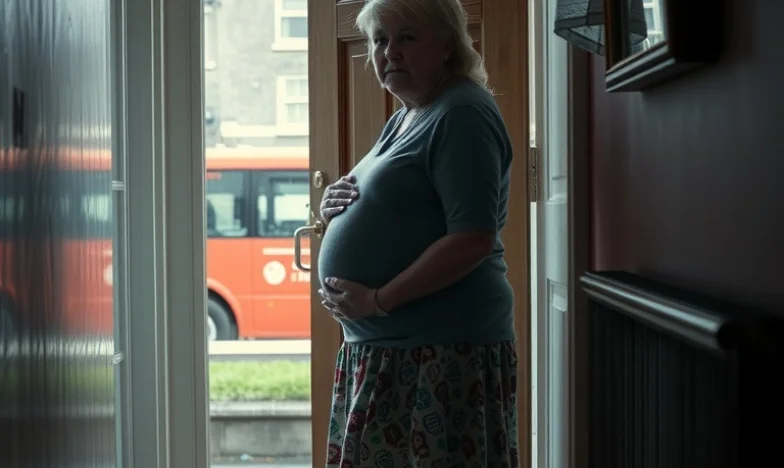
“Mum, please, you can’t go out in your slippers again!” My voice echoed down the narrow hallway of her semi-detached in Reading, but she just stared at me, her eyes blank, her hands trembling around the handle of the front door. Rain battered the windows, and I could hear the distant hum of the 17 bus, but all I could focus on was the way her fingers fumbled with the lock, as if she’d never seen it before.
I should have been home, curled up with Christopher, feeling the gentle flutter of our baby—a miracle at forty-two, after years of heartbreak and failed IVF. Instead, I was here, watching my mother slip further away from me, day by day. The diagnosis had come in January, a cold, clinical word: dementia. The consultant at Royal Berkshire Hospital had spoken gently, but nothing could soften the blow. “It’s early onset, I’m afraid. You’ll need to think about care, support, perhaps even a home in the future.”
A home. The word made me shudder. My mother, once so fiercely independent, who’d raised me alone after Dad left, who’d worked double shifts at the post office to keep food on the table—how could I even think of putting her in a home? But as I watched her now, slippers soaked, confusion etched deep into her face, I felt the first stirrings of fear. Not just for her, but for me, for the baby growing inside me. What if I couldn’t do this? What if I failed them both?
“Mum, come back inside. Please.”
She blinked, as if seeing me for the first time. “Who are you?”
The words hit me like a punch. I swallowed hard, forcing a smile. “It’s me, Anna. Your daughter.”
She frowned, her lips trembling. “Anna? No, my Anna’s at school. You’re not her.”
I bit back tears. “Let’s have a cup of tea, shall we?”
She let me guide her back to the kitchen, where the kettle whistled and the radio played some old Cliff Richard tune. I made her tea, two sugars, just how she liked it, and watched her hands shake as she lifted the cup. I wanted to reach out, to hold her, but she flinched away, as if my touch burned.
That night, after I’d settled her in bed and checked the locks twice, I drove home through the rain, my hands gripping the steering wheel so tightly my knuckles ached. Christopher was waiting, his face creased with worry. “How is she?”
“Worse,” I whispered, sinking into his arms. “She didn’t know me.”
He stroked my hair, his voice gentle. “You can’t do this alone, Anna. We need help.”
But help meant admitting I couldn’t cope. It meant social workers, care assessments, maybe even a care home. I thought of the neighbours, the way Mrs. Patel had looked at me last week, pity in her eyes. “You’re so brave, Anna. I don’t know how you do it.”
I didn’t feel brave. I felt broken.
The weeks blurred together—hospital appointments, care plans, endless forms. My mother grew more distant, sometimes sweet and childlike, sometimes angry and cruel. She accused me of stealing her money, of plotting against her. Once, she slapped me, hard, her eyes wild with fear. “You’re not my daughter! My Anna would never hurt me!”
I ran to the bathroom, locked the door, and sobbed until my stomach cramped. I pressed my hand to my belly, whispering apologies to the baby. “I’m so sorry. I’m trying. I promise I’ll be better for you.”
Christopher tried to help, but he worked long hours at the council, and I could see the strain in his eyes. We argued more—about money, about my mother, about the future. “We can’t go on like this, Anna. You’re exhausted. The baby—”
“I know!” I snapped, guilt flooding me. “But what do you want me to do? Abandon her?”
He pulled me close, his voice breaking. “No. But I don’t want to lose you, either.”
I thought of all the things I’d lost already—my mother’s laughter, her stories, the way she used to brush my hair and call me her clever girl. Now, she barely knew me. Sometimes, I wondered if she’d ever really seen me at all. Our relationship had always been complicated—she was proud, stubborn, quick to anger. She’d never forgiven my father for leaving, and sometimes I felt she’d never forgiven me for looking like him.
One afternoon, as I was sorting through her old photo albums, she wandered in, her eyes bright for once. “Who’s that?” she asked, pointing to a faded picture of me in my school uniform.
“That’s me, Mum. On my first day at St. Mary’s.”
She smiled, a flicker of recognition. “You were always such a serious child. Always reading.”
I laughed, the sound strange in the quiet room. “You used to say I’d be Prime Minister one day.”
She nodded, her gaze distant. “I was proud of you, you know. I didn’t say it enough.”
Tears pricked my eyes. “Thank you, Mum.”
But the moment passed, and soon she was lost again, muttering about lost keys and strangers in the house. I clung to that brief flash of connection, replaying it in my mind as I lay awake at night, listening to the rain against the window, feeling the baby kick inside me.
As my due date approached, the pressure mounted. The social worker, a kind woman named Sarah, visited weekly, bringing leaflets and gentle suggestions. “Have you thought about respite care, Anna? Just for a few days, so you can rest before the baby comes.”
I shook my head. “She’d hate it. She’d think I was abandoning her.”
Sarah’s eyes were kind. “You have to look after yourself, too. And your baby.”
I knew she was right, but the guilt was overwhelming. I remembered all the times my mother had sacrificed for me—working late, skipping meals, never once complaining. How could I do any less for her?
The night my waters broke, I was at my mother’s, trying to coax her into bed. She was agitated, pacing the living room, muttering about someone stealing her jewellery. I doubled over in pain, clutching the arm of the sofa.
“Mum, I need help,” I gasped. But she just stared at me, uncomprehending.
I managed to call Christopher, who arrived in a panic, bundling me into the car. As we sped to the hospital, I looked back at the house, my mother’s silhouette framed in the window, lost and alone.
Our daughter, Emily, was born just after midnight, tiny and perfect. I held her in my arms, tears streaming down my face. Christopher kissed my forehead, his eyes shining with pride and relief.
But even in that moment of joy, I felt the weight of my mother’s absence. She would never hold her granddaughter, never tell her stories or sing her lullabies. The cycle of loss continued, and I wondered if I would ever be free of it.
A week later, I visited my mother with Emily. She stared at the baby, confusion clouding her face. “Whose child is that?”
“She’s yours, Mum. Your granddaughter.”
She smiled, a fleeting, fragile thing. “She’s beautiful. Just like you.”
For a moment, I let myself believe it would be enough.
Now, as I rock Emily to sleep, I wonder what kind of mother I’ll be. Will I repeat my mother’s mistakes, or will I find a way to break the cycle? Can love really heal old wounds, or are some scars too deep to ever truly fade?
Do we ever really escape the shadows of our past, or do we just learn to live with them? What would you do, if you were in my place?