Beneath the Wedding Quilt: A British Tale of Secrets and Acceptance

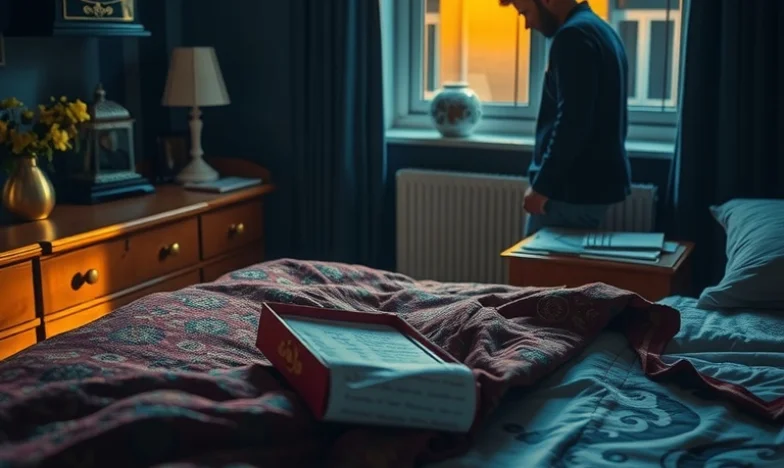
The clock on the mantelpiece struck midnight, its chime echoing through the old terraced house in Leicester, as I sat on the edge of the bed, my hands trembling in my lap. The wedding sari, heavy with gold thread and expectation, felt like a shroud. My new husband, Rajiv, stood by the window, his silhouette outlined by the orange glow of the streetlamp outside. I could hear the muffled laughter of his family downstairs, celebrating a union that, by all accounts, should never have happened.
“Are you alright, Ananya?” Rajiv’s voice was gentle, but there was a tension in it, a note of something unsaid. I nodded, unable to meet his eyes. The truth was, I was terrified. Not of him, but of the secret that had shadowed my life since I was twenty-four, when the doctor told me I would never have children. In our community, that was a scarlet letter, a silent shame. Yet, Rajiv’s family had come to my parents’ door, had asked for my hand, knowing full well what I could not give them.
I remembered the day his mother, Mrs. Patel, had sat across from me in our living room, her eyes sharp and searching. “We know about your condition, Ananya,” she’d said, her voice low but not unkind. “But we believe you are the right match for our Rajiv.” My parents had looked at each other, relief and confusion mingling in their faces. I had wanted to ask why, but the words stuck in my throat. Who was I to question a blessing?
Now, in the hush of our wedding night, the question returned, heavier than ever. Why me? Why now?
Rajiv turned from the window and sat beside me, his hand hovering over mine. “You don’t have to be afraid,” he said softly. “I know this isn’t what you imagined.”
I looked at him then, really looked. There was kindness in his eyes, but also a sadness that mirrored my own. “Why did your family choose me?” I whispered. “You could have married anyone.”
He hesitated, glancing at the closed door as if afraid someone might overhear. “It’s complicated,” he said finally. “But I promise, you’ll understand soon.”
We lay down side by side, the quilt pulled up to our chins. I tried to steady my breathing, tried to believe that everything would be alright. But as I reached to adjust the blanket, my hand brushed against something cold and hard beneath the fabric. I froze. Slowly, I lifted the quilt, my heart pounding in my chest.
There, nestled between the sheets, was a small, ornate box. I glanced at Rajiv, who looked away, his jaw clenched. With trembling fingers, I opened it. Inside was a faded photograph of a little girl, her eyes wide and solemn, and a letter written in careful, looping script.
I unfolded the letter, my eyes scanning the words. As I read, the room seemed to tilt around me.
“To my future wife,
If you are reading this, it means you have become part of our family. I want you to know the truth about why you were chosen. My family has carried a secret for generations. The girl in the photograph is my sister, Priya. She disappeared when she was six. My parents have never recovered. They believe that by bringing someone into the family who understands loss, who knows what it means to grieve for what cannot be, we might finally find peace. I am sorry for the burden this places on you. I hope, in time, you can forgive us.”
Tears blurred the words as I finished reading. I looked at Rajiv, my voice barely a whisper. “You chose me because I’m broken, like your family?”
He shook his head, reaching for my hand. “No, Ananya. We chose you because you’re strong. Because you know how to survive. My parents… they thought you would understand. But I— I wanted you because you’re kind. Because you see people, not just their scars.”
I pulled my hand away, anger flaring in my chest. “You should have told me. I deserved to know the truth.”
He nodded, shame colouring his cheeks. “I know. I was afraid you’d leave.”
The days that followed were a blur of rituals and family gatherings. Mrs. Patel watched me with a mixture of hope and guilt, her eyes lingering on my face as if searching for forgiveness. I went through the motions, smiling for photographs, accepting gifts, but inside I was hollowed out, a shell of the woman I had been.
One evening, as I helped clear the dinner table, Mrs. Patel touched my arm. “Ananya, can we talk?”
We sat in the small conservatory, the rain tapping against the glass. She took a deep breath. “I know what we did was wrong. We should have been honest with you. But after Priya… after she vanished, I lost faith in everything. When we heard about you, about your loss, I thought— maybe you could help us heal. I never meant to hurt you.”
I looked at her, seeing not the stern matriarch but a mother broken by grief. “I can’t be Priya,” I said quietly. “I can’t fill that space.”
She nodded, tears slipping down her cheeks. “I know. I just wanted my son to be happy. I thought… I thought if we could share our pain, maybe it would be easier to bear.”
That night, I lay awake beside Rajiv, listening to the rain. I thought about my own parents, about the years of whispered conversations and forced smiles. I thought about the little girl in the photograph, lost to time and memory. And I thought about myself, about the life I had imagined and the one I had been given.
In the weeks that followed, I began to find my footing. I started volunteering at a local support group for women struggling with infertility. I met others who carried their own silent burdens, who understood the ache of longing and the sting of judgement. Slowly, I began to reclaim my voice.
One afternoon, as I walked home from the community centre, Rajiv met me at the door. He held out a cup of tea, his eyes searching mine. “I want us to start again,” he said. “No more secrets.”
We sat together in the kitchen, sunlight streaming through the window. “I don’t know if I can ever forgive your family,” I said. “But I want to try. For us.”
He smiled, relief softening his features. “That’s all I can ask.”
Over time, the wounds began to heal. Mrs. Patel joined me at the support group, sharing her story with other mothers who had lost children. Rajiv and I learned to build a life not defined by what we lacked, but by what we could create together—love, understanding, and a home filled with laughter.
Sometimes, late at night, I still think about Priya, about the little girl whose absence shaped so many lives. I wonder if she found peace, wherever she is. And I wonder, too, about the choices we make, about the secrets we keep in the name of love.
Would you have forgiven them? Or would you have walked away? I still don’t know if I made the right choice, but perhaps that’s what it means to be human—to keep searching for answers, even when the truth is hard to bear.